As men grow older, certain health concerns become more common, and one of the most frequent is enlargement of the prostate gland. Medically known as Benign Prostatic Hyperplasia (BPH), this condition is not cancerous but can significantly affect quality of life.
If you or a loved one is experiencing frequent urination, weak urine flow, or interrupted sleep due to urinary problems, it could be due to an enlarged prostate. Let’s understand the symptoms, causes, treatment options, and recovery process in detail.
What Is an Enlarged Prostate (BPH)?
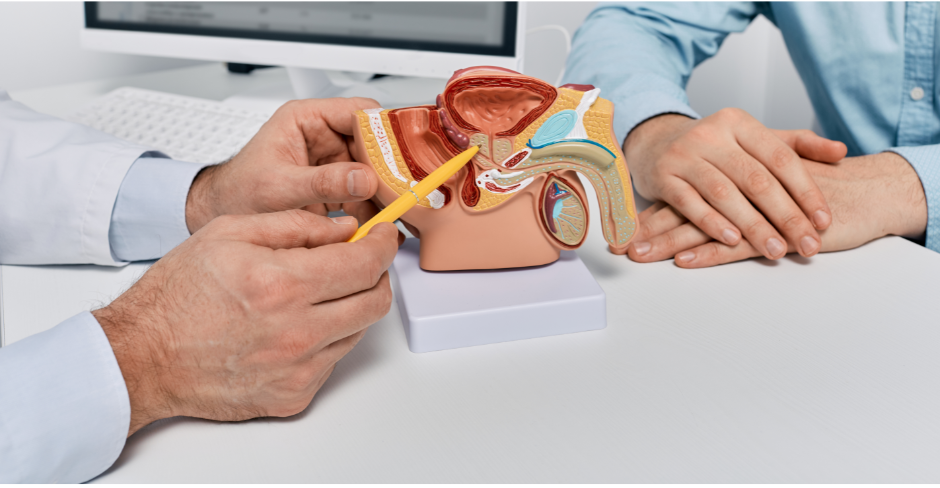
The prostate is a walnut-sized gland located below the bladder in men. Its main function is to produce fluid that nourishes and transports sperm. As men age, the prostate can enlarge, pressing against the urethra (the tube that carries urine out of the body) and causing urinary issues.
Key Facts about BPH:
- Very common in men above 50 years.
- Not the same as prostate cancer.
- Symptoms range from mild discomfort to severe urinary obstruction.
Common Symptoms of Enlarged Prostate
BPH symptoms are often grouped as lower urinary tract symptoms (LUTS).
- Frequent need to urinate, especially at night (Nocturia).
- Difficulty starting urination.
- Weak or interrupted urine stream.
- Dribbling at the end of urination.
- Feeling that the bladder is not completely empty.
- Urgency and inability to hold urine.
If left untreated, severe BPH can lead to complications like urinary tract infections, bladder stones, or even kidney damage.
Causes & Risk Factors
The exact cause of BPH isn’t fully understood, but certain factors increase the risk:
- Age: Most common in men over 50.
- Hormonal Changes: Age-related shifts in testosterone and estrogen levels.
- Family History: Genetics may play a role.
- Lifestyle: Obesity, lack of exercise, and poor diet can worsen symptoms.
Diagnosis of Enlarged Prostate
If you experience urinary symptoms, it’s important to consult a urologist. Dr. Anup Gulati uses a combination of tests to diagnose BPH, such as:
- Digital rectal exam (DRE).
- Prostate-specific antigen (PSA) blood test.
- Ultrasound of the prostate.
- Urine flow test.
- Cystoscopy in selected cases.
Treatment Options for BPH
The treatment for an enlarged prostate depends on the severity of symptoms, overall health, and patient preference.
1. Lifestyle Changes & Watchful Waiting
- Reducing caffeine and alcohol.
- Limiting evening fluid intake.
- Regular exercise.
- Bladder training techniques.
Suitable for men with mild symptoms.
2. Medications
- Alpha-blockers (e.g., tamsulosin) relax prostate muscles for easier urine flow.
- 5-alpha reductase inhibitors shrink the prostate size.
- Combination therapy may be used in some patients.
3. Minimally Invasive Procedures
- TURP (Transurethral Resection of the Prostate): Gold standard surgery to remove excess prostate tissue.
- Laser prostate surgery (HoLEP, Greenlight): Less bleeding, faster recovery.
- UroLift system: Lifts and holds enlarged tissue to relieve pressure on the urethra.
4. Surgery (for Severe Cases)
In advanced cases, surgical removal of prostate tissue may be required.
Recovery After BPH Treatment
- After Medication: Most men notice improvement in a few weeks.
- After Minimally Invasive Surgery: Hospital stay is usually 1–2 days; recovery within 1–2 weeks.
- After TURP or Laser Surgery: Patients may experience mild burning, frequency, or urgency for a few weeks, which gradually improves.
Tips for Faster Recovery:
- Drink plenty of fluids.
- Avoid heavy lifting or straining for 2–3 weeks.
- Follow-up with your urologist as advised.
Living with an Enlarged Prostate
BPH is a long-term condition, but with timely treatment, most men lead a normal, active life. Regular check-ups are important to prevent complications.
Why Choose Dr. Anup Gulati for BPH Treatment in Faridabad?
Dr. Anup Gulati is a leading urologist in Faridabad with vast expertise in the diagnosis and treatment of prostate-related conditions.
- Over 15 years of experience in urology and andrology.
- Skilled in both medical and advanced surgical treatments for BPH.
- Known for patient-centric care and personalized treatment plans.
- Trusted by thousands of patients for safe and effective outcomes.
Final Thoughts
An enlarged prostate (BPH) is a common condition, but it doesn’t have to control your life. With modern treatment options ranging from medications to minimally invasive surgeries, you can find relief and return to your normal routine.
If you are experiencing urinary problems, consult Dr. Anup Gulati – one of the best urologists in Faridabad – for expert evaluation and personalized care.
Frequently Asked Questions (FAQs)
1. Is an enlarged prostate the same as prostate cancer?
No, BPH is non-cancerous. However, both conditions can have similar symptoms, so proper diagnosis is essential.
2. Can lifestyle changes help with BPH?
Yes, limiting caffeine/alcohol, exercising, and reducing evening fluids can help in mild cases.
3. Is surgery always necessary for BPH?
No, many patients improve with medicines or minimally invasive treatments. Surgery is only required in severe cases.
4. How long is recovery after prostate surgery?
Most men recover within 2–3 weeks, depending on the type of surgery.
5. When should I see a urologist?
If you have frequent urination, weak urine flow, or difficulty emptying your bladder, consult a urologist promptly.