
Introduction
Benign Prostatic Hyperplasia (BPH), commonly known as prostate enlargement, is one of the most common health issues affecting men over 50. The condition causes the prostate gland to grow in size, compressing the urethra and making urination difficult.
For decades, Transurethral Resection of the Prostate (TURP) was considered the “gold standard” surgical treatment. However, with advancements in medical technology, Laser Prostate Surgery (like HoLEP – Holmium Laser Enucleation of the Prostate and GreenLight Laser Therapy) has emerged as a minimally invasive and highly effective alternative.
So, the question many patients ask today is —
👉 “Which is better for enlarged prostate – Laser Prostate Surgery or TURP?”
Let’s explore both options in detail, their differences, advantages, risks, and recovery outcomes to help you make an informed decision.
Understanding Enlarged Prostate (BPH)
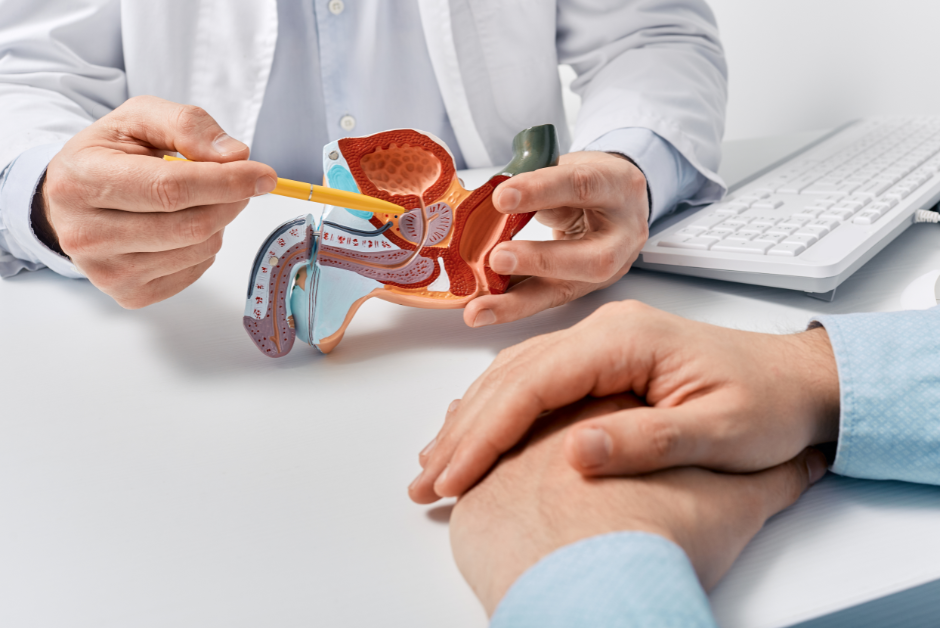
The prostate gland, located below the bladder, surrounds the urethra (the tube that carries urine out of the body). As men age, hormonal changes can cause the prostate to enlarge — a condition known as Benign Prostatic Hyperplasia (BPH).
Common Symptoms of BPH:
- Frequent urge to urinate, especially at night (nocturia)
- Difficulty starting urination
- Weak or interrupted urine flow
- Dribbling at the end of urination
- Feeling that the bladder is not completely empty
When medications like alpha-blockers or 5-alpha-reductase inhibitors fail to control these symptoms, surgical treatment becomes necessary.
What Is TURP (Transurethral Resection of the Prostate)?
TURP is a surgical procedure where a urologist inserts a resectoscope through the urethra to remove parts of the enlarged prostate tissue.
Key Features of TURP:
- No external incisions
- Performed under spinal or general anesthesia
- Excess prostate tissue is cut and removed to relieve obstruction
- A catheter is usually placed post-surgery for urine drainage
TURP has been successfully used for over 50 years and remains a reliable procedure, particularly for moderately enlarged prostates.
What Is Laser Prostate Surgery?
Laser Prostate Surgery uses high-energy laser beams to remove or vaporize excess prostate tissue that blocks urine flow.
Types of Laser Prostate Surgery:
- HoLEP (Holmium Laser Enucleation of the Prostate):
Uses a holmium laser to remove large portions of prostate tissue precisely. The tissue is then morcellated and removed. - GreenLight Laser (PVP – Photoselective Vaporization of the Prostate):
Vaporizes prostate tissue using a high-powered green laser with minimal bleeding. - Thulium Laser Enucleation (ThuLEP):
Another advanced laser technique that offers precision cutting with minimal damage to surrounding tissue.
These procedures are minimally invasive and offer faster recovery compared to conventional methods.
Laser Prostate Surgery vs TURP: A Detailed Comparison
| Feature | TURP | Laser Prostate Surgery (HoLEP / GreenLight) |
| Type of Procedure | Surgical resection using electrical current | Tissue removal/vaporization using laser energy |
| Invasiveness | Moderately invasive | Minimally invasive |
| Bleeding Risk | Higher (especially in large prostates or patients on blood thinners) | Very low – laser seals blood vessels instantly |
| Suitable for Large Prostates | Limited (usually <80-100g) | Ideal for very large prostates (>100g) |
| Catheter Duration | 2–3 days | 1 day or even same-day removal in some cases |
| Hospital Stay | 2–3 days | Usually 1 day |
| Recovery Time | 2–4 weeks | 1–2 weeks |
| Durability of Results | Long-lasting | Equally or more durable (especially with HoLEP) |
| Risk of Retrograde Ejaculation | Common (up to 70%) | Still possible, but slightly lower rates |
| Blood Loss | Moderate | Minimal |
| Re-treatment Rate | Moderate | Very low |
| Cost | Comparatively lower | Slightly higher due to technology cost |
Advantages of Laser Prostate Surgery
- Minimally Invasive:
No incisions, minimal tissue trauma, and faster recovery. - Less Bleeding:
Laser energy cauterizes blood vessels instantly, making it safe for patients on anticoagulants. - Shorter Hospital Stay:
Many patients are discharged within 24 hours. - Faster Catheter Removal:
Catheter can often be removed the next day. - Effective for Large Prostates:
Especially in HoLEP, the laser can enucleate large prostates effectively, which TURP may not manage efficiently. - Long-Term Relief:
Studies show laser procedures like HoLEP provide durable relief comparable or superior to TURP.
Advantages of TURP
- Well-Established Procedure:
Decades of proven success and standardized surgical approach. - Cost-Effective:
TURP is generally less expensive than laser surgeries. - Effective for Moderate Enlargement:
Ideal for prostates that are not extremely large (<80 grams).
Disadvantages and Risks
TURP:
- Higher risk of bleeding
- Longer recovery time
- Risk of TUR Syndrome (due to fluid absorption)
- Longer hospital stay
- Retrograde ejaculation in many cases
Laser Surgery:
- Slightly higher upfront cost
- Requires specialized equipment and expertise
- Temporary burning sensation during urination (in some cases)
Recovery and Post-Surgery Care
After TURP:
- Catheter usually stays for 2–3 days
- Possible mild bleeding for a few days
- Avoid heavy exercise or sexual activity for 4–6 weeks
- Resume normal activities after 2–4 weeks
After Laser Surgery:
- Catheter may be removed within 24 hours
- Minimal pain or bleeding
- Resume routine activities within a week
- Faster return to normal life
Laser procedures typically offer quicker recovery and better comfort, especially for older patients or those with other medical conditions.
Which One Should You Choose?
Choosing between TURP and Laser Prostate Surgery depends on multiple factors such as:
- Size of the prostate gland
- Patient’s age and general health
- Blood-thinning medication use
- Availability of laser technology and surgeon’s expertise
For most modern cases, Laser Prostate Surgery (especially HoLEP) is considered the preferred option due to:
- Minimal bleeding
- Shorter hospital stay
- Long-term effectiveness
- Safety for large prostates
However, TURP remains a good choice for smaller prostates or when laser facilities are unavailable.
Expert Opinion – Dr. Anup Gulati
“Laser Prostate Surgery has revolutionized the way we treat enlarged prostate. Procedures like HoLEP offer precise, bloodless surgery with rapid recovery and excellent long-term results. However, the choice of treatment should always be personalized after thorough evaluation.”
— Dr. Anup Gulati, Urologist & Andrologist, Faridabad
Frequently Asked Questions (FAQs)
1. Is laser prostate surgery safer than TURP?
Yes, laser surgery is generally safer due to minimal bleeding and faster recovery, especially for elderly patients or those on blood thinners.
2. How long does it take to recover from laser prostate surgery?
Most patients resume normal activities within 7–10 days, much faster than TURP.
3. Will I have to use a catheter after laser surgery?
Yes, but typically only for a few hours or up to one day.
4. Can BPH come back after surgery?
Both TURP and laser surgeries offer long-term relief, but in rare cases, prostate tissue may regrow after several years.
5. Is laser prostate surgery painful?
It causes minimal discomfort; most patients report very little pain post-procedure.
Conclusion
Both Laser Prostate Surgery and TURP are effective treatments for enlarged prostate (BPH).
While TURP has a long track record, laser techniques like HoLEP and GreenLight offer safer, faster, and more precise alternatives with quicker recovery and minimal bleeding.
If you’re considering treatment for an enlarged prostate, consult a qualified urologist who can assess your condition and recommend the most suitable option.