
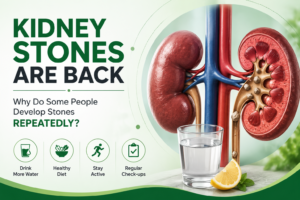
Experiencing kidney stones once can be painful and distressing. But for some people, the problem does not end after the stone passes or is surgically removed. Kidney stones may return months or even years later, sometimes affecting the same kidney or developing in the other one.
Recurrent kidney stones are a common concern in urological practice. While treatment can successfully remove existing stones, it may not address the underlying factors responsible for their formation.
So, why do kidney stones keep coming back? Is it because of inadequate water intake, dietary habits, genetics or an underlying medical condition? More importantly, what can be done to prevent them from recurring?
Why Do Kidney Stones Keep Coming Back?
Kidney stones develop when certain minerals and salts in the urine become highly concentrated and form crystals. Over time, these crystals can grow and develop into stones.
Several factors can increase the likelihood of recurrence.
- Inadequate Water Intake
One of the most important risk factors for kidney stone formation is insufficient fluid intake. When the body does not receive enough fluids, urine becomes concentrated, allowing minerals such as calcium, oxalate and uric acid to crystallise more easily.
People who work long hours, travel frequently, spend extended periods outdoors or exercise in hot weather may be particularly vulnerable to dehydration.
- Dietary Habits and Excessive Salt Consumption
Diet plays an important role in kidney stone formation. Excessive salt intake can increase the amount of calcium excreted in urine, potentially raising the risk of calcium-based stones.
Frequent consumption of processed foods, excessive animal protein and foods rich in oxalates may also contribute to stone formation in susceptible individuals.
However, dietary recommendations should depend on the type of stone and the individual’s metabolic profile.
- Underlying Metabolic Conditions
Some individuals have a natural tendency to develop kidney stones because of abnormalities in their body’s metabolism.
These may include:
- High calcium levels in urine (hypercalciuria).
- Increased oxalate levels in urine (hyperoxaluria).
- Low urinary citrate levels, which normally help prevent crystal formation.
- High uric acid levels.
- Abnormally acidic urine.
Unless these underlying factors are identified and managed, stones may continue to form even after successful treatment.
- Family History and Genetic Factors
A family history of kidney stones can increase an individual’s risk of developing them. Certain inherited conditions, including cystinuria and familial hypercalciuria, may also contribute to recurrent stone formation.
People who develop stones at a young age or experience repeated episodes should discuss their family history and risk factors with a urologist.
- Obesity, Diabetes and Lifestyle Factors
Obesity, diabetes and metabolic syndrome are associated with an increased risk of kidney stone disease.
Sedentary habits, unhealthy eating patterns and metabolic abnormalities can affect urine composition and create conditions that favour stone formation.
- Incomplete Stone Clearance or New Stone Formation
Sometimes, small stone fragments may remain in the urinary tract after a procedure and subsequently grow. In other cases, a completely new stone may develop because the underlying risk factors remain unchanged.
This is why follow-up imaging and appropriate metabolic evaluation are important, particularly for people who experience repeated episodes.
Does Removing a Kidney Stone Mean It Will Never Return?
Not necessarily.
Procedures such as ureteroscopy, laser lithotripsy and other stone-removal techniques can effectively treat existing kidney stones. However, these procedures do not automatically correct the metabolic or lifestyle factors responsible for stone formation.
For example, a patient may undergo successful laser treatment to remove a kidney stone but continue to have low fluid intake, excessive urinary calcium or other metabolic abnormalities.
Without addressing these factors, the possibility of developing another stone remains.
The objective of kidney stone treatment should therefore go beyond removing the existing stone. It should also include identifying the reason behind its formation and reducing the risk of recurrence.
What Tests Can Help Identify the Reason Behind Recurrent Kidney Stones?
People who experience repeated kidney stones may benefit from a detailed evaluation to identify their individual risk factors.
Depending on the clinical history, symptoms and previous investigations, a urologist may recommend:
- Stone Analysis: Examining the composition of the passed or surgically removed stone helps identify whether it contains calcium oxalate, calcium phosphate, uric acid or other substances.
- Blood Investigations: Tests may assess kidney function, calcium, uric acid and other relevant metabolic parameters.
- Urine Examination: Urine testing can help identify infections, blood, abnormal pH and other abnormalities.
- 24-Hour Urine Analysis: In patients with recurrent or high-risk kidney stones, this test measures urine volume and substances such as calcium, oxalate, citrate, sodium and uric acid to identify factors contributing to stone formation.
- Imaging Investigations: Ultrasound, CT scans or other imaging techniques may be recommended to identify existing stones, their location, size and any associated obstruction.
Not every patient requires all these investigations. The evaluation should be tailored to the individual’s medical history and recurrence risk.
7 Practical Ways to Reduce the Risk of Kidney Stone Recurrence
Although not every kidney stone can be prevented, certain lifestyle and dietary measures can significantly help reduce the risk.
- Maintain Adequate Hydration
Drink sufficient water throughout the day. Fluid intake should be adjusted according to your activity level, climate and medical condition. For many recurrent stone formers, doctors aim for a urine output of more than 2.5 litres over 24 hours.
- Reduce Excess Salt Consumption
Limit excessive salt, packaged snacks, processed foods and high-sodium meals. A high-sodium diet can increase urinary calcium excretion.
- Do Not Eliminate Calcium From Your Diet
Contrary to a common misconception, avoiding calcium-rich foods is not generally recommended for calcium stone formers. Adequate dietary calcium can help reduce the absorption of oxalate in the intestine. Follow your doctor’s dietary advice.
- Moderate Animal Protein Intake
Excessive consumption of animal protein may increase urinary calcium and uric acid while reducing urinary citrate in some individuals. Maintain a balanced diet with appropriate protein intake.
- Be Mindful of High-Oxalate Foods
People with calcium oxalate stones and elevated urinary oxalate may need to moderate foods such as spinach, nuts and certain other high-oxalate items. Dietary restrictions should be based on individual evaluation rather than eliminating these foods unnecessarily.
- Maintain a Healthy Weight
Regular physical activity, a balanced diet and healthy weight management can help improve metabolic health and reduce associated risk factors.
- Follow Your Doctor’s Advice and Attend Regular Check-ups
People with recurrent stones may require specific medication depending on their stone composition and urine test results. Periodic follow-up helps assess treatment effectiveness and identify new stone formation early.
When Should You Consult a Urologist?
Kidney stones may sometimes remain unnoticed until they cause significant discomfort or urinary obstruction.
You should seek medical evaluation if you experience:
- Severe pain in the side, back or lower abdomen.
- Blood in the urine.
- Pain or burning sensation while passing urine.
- Frequent urinary infections.
- Nausea or vomiting associated with severe flank pain.
- Repeated episodes of kidney stones.
Fever or chills accompanied by kidney stone symptoms, particularly when associated with urinary obstruction, require urgent medical attention. Such infections can become serious and should not be managed by waiting at home.
The Key to Kidney Stone Prevention Is Understanding Why They Form
Kidney stones should not be viewed as a one-time medical problem, particularly in individuals who experience repeated episodes. Successful treatment involves not only removing existing stones but also identifying and managing the factors responsible for their formation.
With appropriate investigations, personalised dietary recommendations, adequate hydration and medical follow-up, many patients can reduce their risk of developing kidney stones again.
A message from Dr. Anup Gulati: If you have experienced kidney stones more than once, do not simply wait for the next episode. Understanding why stones are forming is an important step towards preventing recurrence and protecting your long-term kidney health.
For persistent symptoms, recurrent kidney stones or suspected urinary obstruction, consult a qualified urologist for appropriate evaluation and treatment.